
Old City, Nimman or Riverside? Choose Your Chiang Mai Base
Compare Chiang Mai’s Old City, Nimman and Ping Riverside for sightseeing, cafés, hotel time, transport needs and flood-season planning.
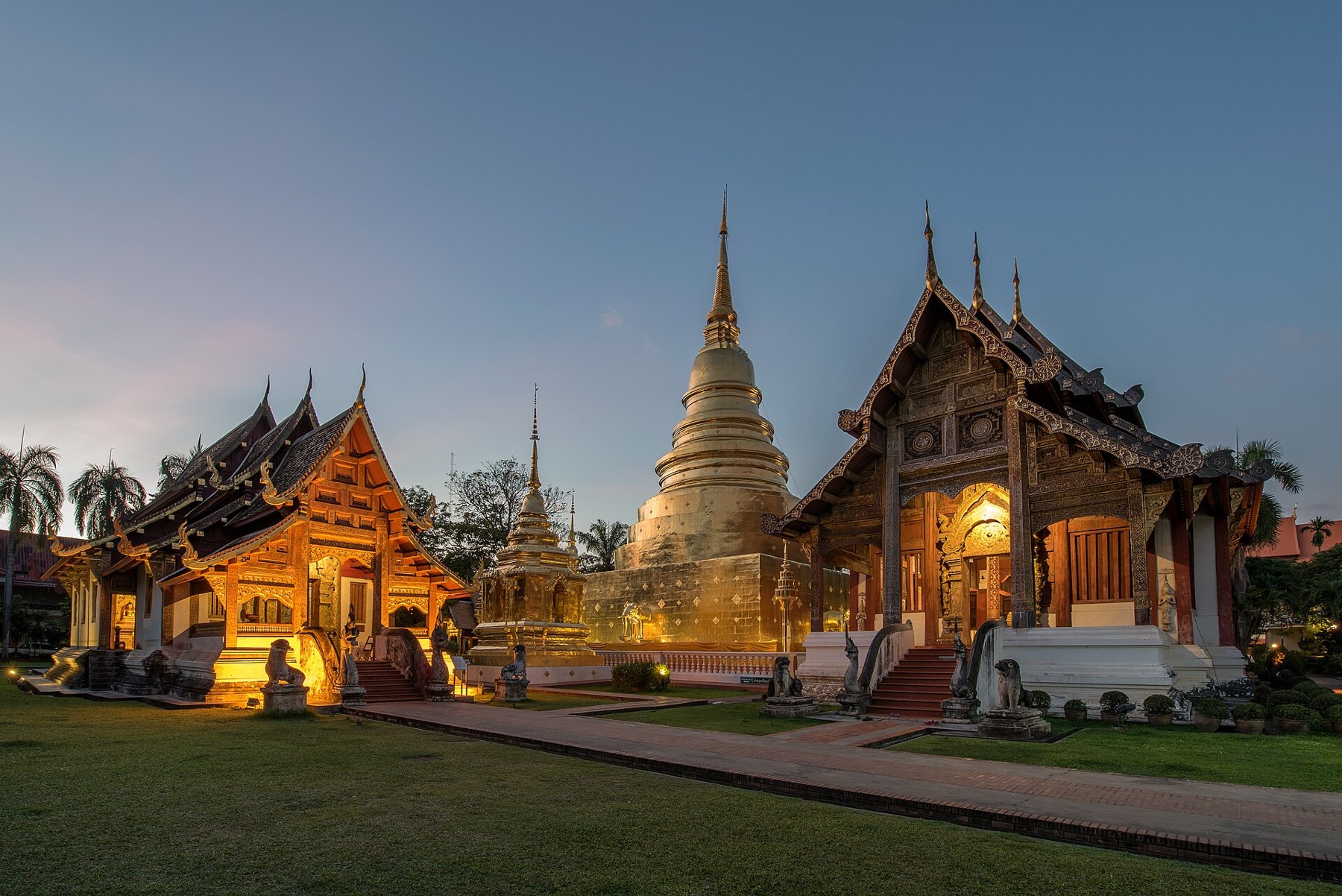
Choose the Old City for historic sights and the simplest first visit; Nimman for cafés, dining and a more contemporary urban base; or the Ping Riverside when the hotel and river setting are central to the trip.
There is no universal winner. The useful question is what you want outside the hotel door each morning. “Riverside” requires the most scrutiny: it covers separate pockets on both banks of the Ping, and a river-adjacent address does not necessarily provide an easy walking route to central sights.
| Area | Best fit | Main compromise |
|---|---|---|
| Old City | First visits, temples and sightseeing on foot | Traffic around the moat; noise varies greatly by street |
| Nimman | Cafés, restaurants, shopping and an urban routine | Historic sights usually require a ride or a long walk |
| Riverside | River-facing hotels, hotel time and slower evenings | The exact property matters; expect more rides |
Old City: best for a first sightseeing visit
The Old City is the near-square district enclosed by Chiang Mai’s moat. Wat Phra Singh, Wat Chedi Luang, the Three Kings Monument and many smaller temples sit within this compact area. Thailand’s submission to UNESCO’s Tentative List describes the fortified city as an almost-square plan established as King Mangrai’s Lanna capital in 1296. Tentative-list status is not World Heritage inscription (UNESCO World Heritage Centre). The Tourism Authority of Thailand lists Wat Chedi Luang on Phra Pokklao Road, near the district’s centre (Tourism Authority of Thailand).
This concentration makes the Old City the most straightforward base for days built around temples and historic streets. It is easy to visit one or two compounds, stop for lunch and return to the hotel before going out again. It also suits visitors who would rather walk between central sights than arrange several short rides.
The district is not uniformly calm or pedestrian-friendly. Active roads border the moat, and internal streets range from quiet residential lanes to clusters of bars, guesthouses and visitor businesses. Crossing the moat roads can be less comfortable than walking within them.
Choose the Old City if:
- this is a first or short Chiang Mai visit;
- temples and historic streets are the main priorities;
- Sunday Walking Street is part of the plan;
- reducing routine rides matters more than being near a modern mall.
Check before booking: Pin the property on a map rather than relying on the district label. A room beside the moat may face a busy road, while one deep in a lane may have less convenient vehicle access. If sleep is a priority, ask which direction the room faces and check recent room-specific reviews.
Nimman: best for cafés and contemporary city life
Nimman is the grid around Nimmanhaemin Road, west of the Old City. Its main commercial anchors include One Nimman at 1 Nimmanhaemin Road and MAYA Lifestyle Shopping Center near the Huay Kaew Road junction. One Nimman’s official site lists shops, a market, events and an art gallery, illustrating the area’s contemporary rather than historic focus (One Nimman). Cafés, restaurants, bars and small shops extend into the surrounding sois.
Nimman works well when everyday routine matters as much as conventional sightseeing. It is easier to organize a day around coffee, a work session, shopping and dinner without crossing the city between each stop. Repeat visitors and travellers spending substantial time at cafés or in their accommodation may find that more useful than having temples at the door.
The compromise is distance from the Old City’s historic concentration. Wat Chedi Luang, Tha Phae Gate and the central riverside are not part of the immediate neighbourhood. Walking is possible for some routes, but heat, rain and traffic can make a short ride the more practical choice.
Noise also depends on the exact soi and room. A hotel near bars or live-music venues will feel different from one on a quieter side street. Travellers concerned about aircraft or nightlife noise should check recent reviews for the specific property rather than assuming all of Nimman has the same conditions.
Choose Nimman if:
- cafés, contemporary restaurants and evening options are daily priorities;
- the trip includes remote work or plenty of unstructured time;
- modern shopping and services are more useful than temples at the doorstep;
- taking rides to historic sights is acceptable.
Check before booking: Look at the exact soi and nearby venues. Ask about street-facing rooms, window glazing and late-night noise. “Near Nimman” can also describe properties beyond the most walkable central grid, so verify the route to the places you expect to use.
Riverside: best when the hotel is part of the trip
“Riverside” generally means accommodation along or near the Ping River, east of the Old City, but it is not a single bounded neighbourhood. For a central stay, useful reference points include Nawarat Bridge, the Wat Ket and Charoen Rat area on the east bank, and Charoen Prathet and the Night Bazaar side to the west.
This area is most appealing when the property itself is part of the plan: breakfast by the water, time at a pool or dinner at the hotel. An east-bank address around Wat Ket can feel more removed from the historic centre, while a west-bank property near Nawarat Bridge may offer easier access to the Night Bazaar area. These are tendencies, not guarantees; the walking route matters more than the marketing label.
The main booking risk is choosing by atmosphere rather than position. One hotel may sit near a bridge and useful streets, while another requires a vehicle for almost every outing. The riverbank is not a continuous public promenade, so a short straight-line distance on a map does not always translate into a convenient walk.
High water is another location-specific consideration. On 24 September 2024, a Chiang Mai Municipality warning advised riverside residents to move belongings and vehicles to higher ground as the Ping rose near Nawarat Bridge. The report identified lower-lying Nong Hoi and Pa Dat as the areas most at risk at that time (Bangkok Post). That dated event does not show that every riverside hotel has the same exposure. It does justify checking current warnings and asking a property about entrance and road access when heavy rain or flooding is reported.
Choose Riverside if:
- a river view or full-service hotel is central to the stay;
- time at the property matters more than immediate access to historic sights;
- taking rides to the Old City and Nimman is acceptable;
- the chosen hotel has a verified view and a practical route to a bridge.
Check before booking: Identify the bank, nearest bridge and actual walking route. “Near the river” does not promise a river-facing room. Ask the hotel to confirm the room category and, during wet conditions, whether its normal access roads are affected.
The simplest decision rule
Pick the area that removes the journeys you would otherwise repeat:
- Old City if most mornings begin with temples and historic sights.
- Nimman if most days revolve around cafés, work, shopping or contemporary dining.
- Riverside if the accommodation and river setting are major parts of the experience.
For most first-time visitors focused on sightseeing, the Old City is the practical default. Choose Nimman or Riverside instead when their particular advantages—not simply a lower room rate or a broad neighbourhood label—match how you expect to spend each day.